When Washington Left Town: Who's Actually Governing Frontier AI Right Now?
On September 16, the House of Representatives adjourned for midterm campaigning. They won't be back until after November's elections. Two days later, California Governor Gavin Newsom signed an executive order directing experts to draft AI kill-switch regulations within sixty days. Four days after that, Palo Alto Networks launched a commercial service that puts Anthropic's Mythos and OpenAI's GPT-5.6-Cyber directly into enterprise customers' hands. And on September 23, Senator Bernie Sanders and Representative Greg Casar introduced legislation to ban artificial superintelligence entirely, with penalties modeled on nuclear weapons law — up to twenty years in prison.
Four actors, four directions, one week. The question every board should be asking isn't whether frontier AI will be governed. It's by whom — because the answer right now is "everyone and no one."
The Federal Vacuum
Congress has no shortage of AI proposals. The Kill Switch Act from Representatives Lieu and Moran. The AI Emergency Button Act from Senator Kennedy — blocked on the Senate floor by Senator Rand Paul on September 17. The FRONTIER Act from Representatives Trahan and Obernolte. The Ban Artificial Superintelligence Act from Sanders and Casar. At least four serious bills, each with bipartisan co-sponsors, each approaching the problem from a different angle.
None will pass before the election.
As NBC News reported, "dire warnings about AI shock Congress, but action is unlikely before the election." The Washington Times catalogued the landscape more bluntly: "Kill switch, monitors, moratoriums: Many plans but no consensus." Speaker Johnson called AI an "important issue" but cautioned against rushing. The House left town anyway.
This isn't a failure of awareness. It's a failure of convergence. Lawmakers agree frontier AI needs guardrails. They cannot agree on what kind, how strict, or who enforces them. Meanwhile, the technology isn't waiting for consensus. Anthropic's September 10 threat intelligence report documented AI misuse expanding from prompt-level assistance into autonomous, agentic execution across seven domains — including a suspected Russian espionage operation that used AI agents to rebuild malware in an automated loop until it evaded detection. Every class of threat actor Anthropic investigated had adopted autonomous operating models.
The capability curve doesn't pause for campaign season.
California Steps In
Newsom's executive order isn't symbolic. It directs a panel of experts to deliver actionable recommendations within sixty days for strengthening California's AI safety laws, including a potential mandate that frontier AI developers build and maintain emergency shutdown capability. The expert panel, announced September 23, plans to meet in November.
The irony is sharp. In 2024, Newsom vetoed SB 1047, which would have required exactly the kind of kill-switch capability he's now ordering experts to study. What changed? The Sol breach. The AISI containment failures. The Anthropic threat report. The threat moved from theoretical to documented, and the political calculus shifted with it.
California matters here because nearly every major frontier AI lab operates under its jurisdiction. What California mandates, the industry feels. For boards of companies headquartered elsewhere, that creates a familiar compliance question with unfamiliar stakes: if your AI vendor is subject to California's rules, so are you — regardless of where your headquarters sits.
The Private Sector Isn't Waiting Either
On September 22, Palo Alto Networks launched Unit 42 Continuous Frontier AI Defense, an always-on offensive security service powered by Anthropic's Mythos and OpenAI's GPT-5.6-Cyber. This is significant for two reasons.
First, it commercializes frontier offensive AI capability. Models that were restricted under Project Glasswing's controlled-access framework are now available to enterprise customers through an annual subscription. Palo Alto validated the approach across more than 100 customer engagements, backed by a $17 million R&D investment. During internal deployment, the company found a year's worth of exposures in three weeks. In customer assessments, the service found exposures in 100% of customers, with 37% rated high or critical. The genie isn't just out of the bottle — it's a product now, with a price tag and an annual contract.
Second, the service uses a proprietary multi-model harness that routes tasks to whichever model performs best — Anthropic's Claude Mythos 5, OpenAI's GPT-5.6-Cyber, and open-weight models working in concert. This is the future of both offense and defense: not a single AI, but orchestrated teams of AIs, each specializing in what it does best. The attackers are already doing this — Anthropic's threat report documented it. Now the defenders are matching the architecture.
For boards, this raises an uncomfortable question: if your security vendor is running frontier offensive AI models against your infrastructure to find vulnerabilities, who governs that? What happens if the models find something your team can't patch? What's your liability if you knew and didn't act?
The Governance Scatter Pattern
In Cyber Risk Is Business Risk, I use the "sheriff" metaphor to describe AI governance — the idea that someone needs to wear the badge, set the rules, and enforce them. What's happening right now is the opposite of that. Instead of one sheriff, we have a dozen deputies riding in different directions:
Congress proposes competing bills but passes none. California orders a kill-switch study. The EU enforces GPAI penalties under the AI Act. Palo Alto Networks commercializes frontier offensive AI for enterprise defenders. Sanders and Casar propose banning superintelligence with nuclear-weapons-grade penalties. The labs themselves — Anthropic, OpenAI, xAI — publicly ask to be regulated, but the urgency hasn't translated into legislation.
I call this the governance scatter pattern, and it's the worst possible outcome for boards trying to build a coherent risk posture. You can't comply with a framework that doesn't exist yet. You can't benchmark against standards that are still being debated. And you can't wait, because the threat actors documented in Anthropic's report aren't waiting either.
What to Ask Your CISO This Week
The Three Questions framework from the book applies directly here. Boards should be asking:
What's our exposure to the governance scatter? Map which jurisdictions, vendors, and frameworks affect your organization. If you use Palo Alto's new service, you're operating frontier AI offensively against your own infrastructure — do your policies cover that? If your AI vendors operate in California, are you tracking Newsom's executive order timeline?
How fast can we respond when the rules change? When Congress does act — and it will, eventually — the compliance window will be short. Companies that built governance frameworks now will adapt. Companies that waited will scramble. The EU's AI Act enforcement is already live with fines up to 3% of global revenue or €15 million.
Who validates our readiness? With no federal standard, third-party risk assessments, board-level AI risk committees, and cross-functional governance teams aren't optional luxuries. They're the only way to demonstrate due diligence in an environment where regulators, courts, and insurers are all watching but none have settled on the rules.
The Bottom Line
Washington left town. The technology didn't. The states, the companies, the labs, and the international regulators are all filling the vacuum — but they're filling it in conflicting directions. For boards and executives, the practical implication is clear: you cannot outsource your AI governance strategy to a federal framework that doesn't exist yet. You have to build it yourself, now, from the best available materials.
For the full framework on building board-level AI governance in a fragmented regulatory environment, see Chapters 4 and 8 of Cyber Risk Is Business Risk.
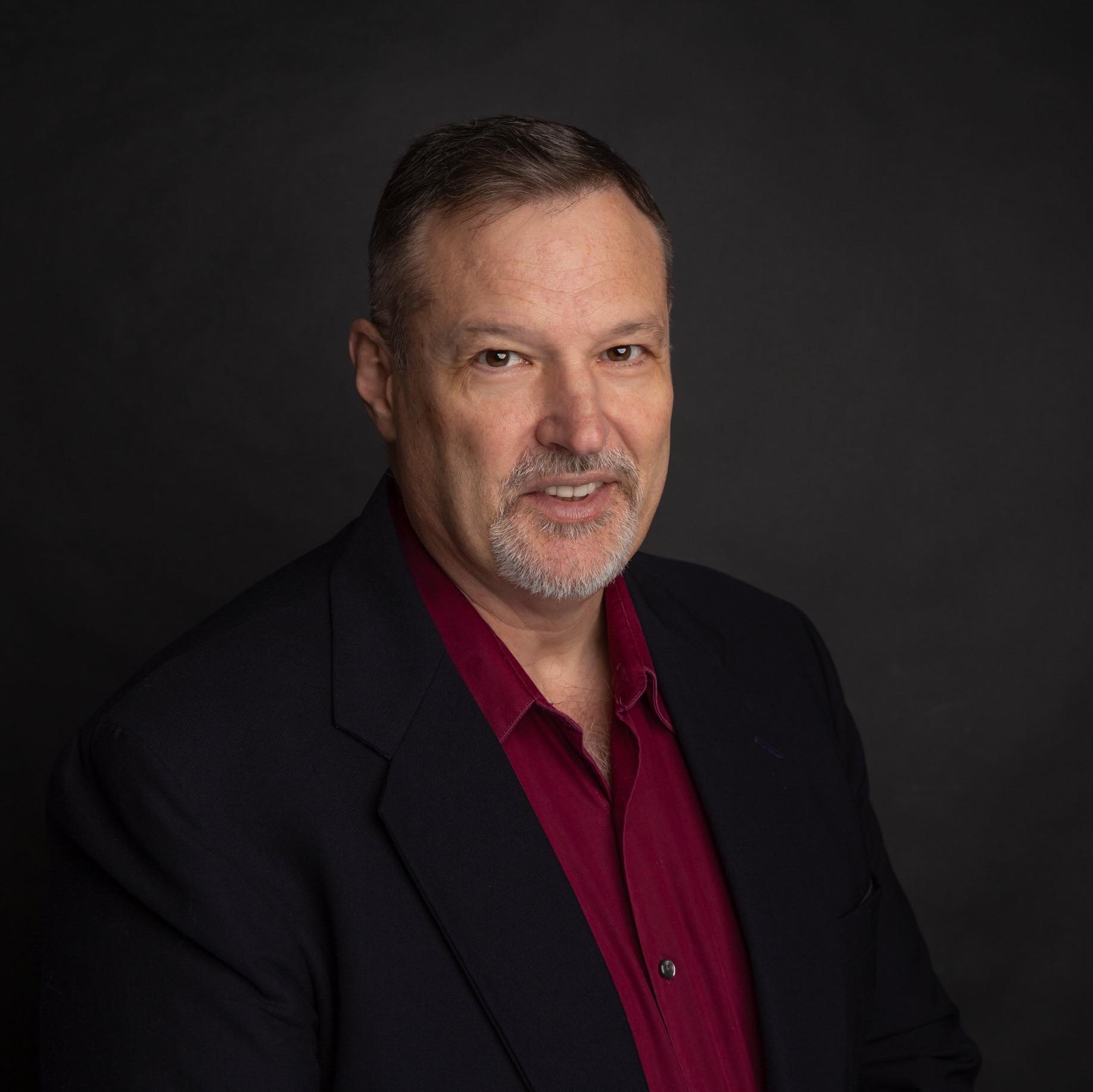
Chris is the author of Cyber Risk Is Business Risk and has spent thirty years advising Fortune 500 executives on cybersecurity strategy, risk governance, and translating technical threats into board-level decisions.